Am I Too Old to Learn Piano?
No. You can learn piano at any age.
In fact, adults often have some advantages when learning. You know the kind of music you enjoy, you can understand patterns and ideas that might be difficult for a child, and you’re learning because you’ve chosen to.
You don’t need any special musical talent and you don’t need to practise for hours every day. What matters much more is finding a way of learning that you enjoy and practising regularly.
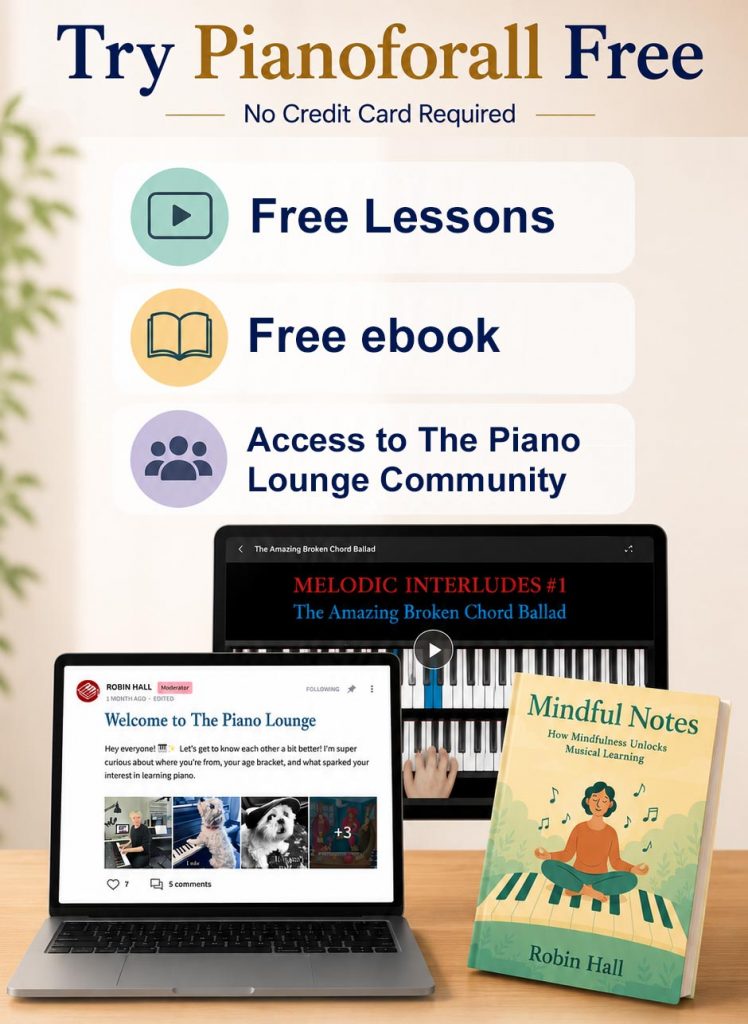
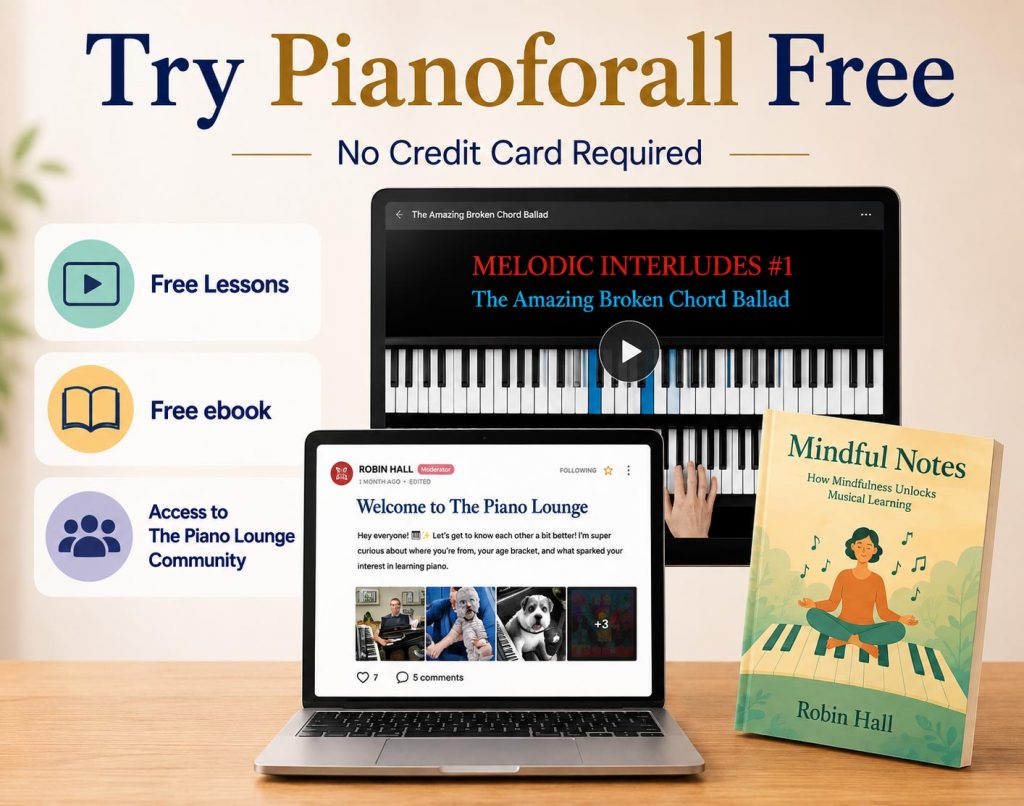
Try the Free Pianoforall Test Drive
Why Adults Can Learn Piano Very Well
One of the reasons I created Pianoforall specifically for adults is that I don’t think adults necessarily need to learn in the same way as children.
Adults are very good at recognising patterns.
If I show you three chords and then show you how those same chords appear in lots of different songs, that makes sense.
If I teach you a rhythm pattern that can be used with hundreds of songs, you’re learning something you can use again and again.
And because you already know what music sounds like, you have years of listening experience to draw on, even if you’ve never played an instrument before.
How Pianoforall Works
My motto with Pianoforall is Play First, Ask Questions Later.
Most traditional methods begin with reading music and theory. Pianoforall does it the other way round.
You start with some simple chord shapes and rhythms and begin making music almost immediately. Reading and theory are then introduced gradually as you progress.
The lessons are short and carefully structured, with each new exercise adding something to what you’ve already learned.
You can also repeat lessons as often as you need and learn entirely at your own pace. That’s one of the great advantages of learning online.
I’ve included some simple mindfulness ideas too — things like relaxing your shoulders, noticing tension and taking a moment before trying something again. I think being relaxed makes learning much more enjoyable.
What About the Brain? Are We Too Old to Learn New Things?
Our brains continue to change and learn throughout life.
It may take a little longer to learn some things as we get older, but that certainly doesn’t mean we can’t learn them.
For piano, regular practice is much more important than marathon practice sessions. Your brain and your hands need time to become familiar with new movements and patterns.
Something that feels impossible today can feel surprisingly easy a few days later.
That’s one of the nicest things about learning piano.
How Quickly Will I Progress?
I don’t like giving people promises such as “You’ll be playing piano in three weeks.”
Everyone is different.
But with Pianoforall, you will be playing from the beginning.
You’ll start with some simple chords and rhythm patterns. As you become comfortable with those, each new exercise adds another skill or idea.
Gradually the chords and patterns become familiar, your hands become more relaxed and you’re able to do more without having to think about every movement.
That’s how progress happens.
Can Older Beginners Learn Classical Piano?
Absolutely.
Classical music can look particularly intimidating because there can be hundreds of notes on the page.
But many classical pieces are built around chords and repeating patterns. Once you learn to recognise those, there’s often much less to remember than you might think.
That’s the idea behind my Classics By Ear courses. I use videos, keyboard diagrams, cheat sheets and written music to teach each piece in small sections.
Beethoven – Moonlight Sonata
The first movement has repeating patterns throughout, which makes it particularly suitable for this approach.
Erik Satie – Gnossiennes
Beautiful pieces with relatively simple underlying chords and patterns.
Bach Preludes
Again, understanding the patterns and underlying chords makes these pieces much easier to remember.
How Much Should You Practise?
You don’t need to practise for hours.
Fifteen or twenty minutes regularly is much better than doing one long practice session every week.
If something is difficult, don’t keep playing the whole piece from beginning to end. Take the small section that’s causing the problem and slow it right down.
Once that becomes comfortable, add the next little section.
And pay attention to tension. If your hands, arms or shoulders are becoming tight, stop for a moment and relax them before starting again.
The important thing is to give yourself time. Your hands are learning movements they’ve probably never made before.
What Older Pianoforall Students Say
I’ve taught thousands of older students over the years, including many people who started learning after retirement.
Here are a few comments from Pianoforall students:
“Thank you for making an ole man feel good about himself. I am showing up my grandkids who never would dream I could do this.”
Martin
“Please accept my highest respect for possibly the best tutorial of all time – I’m 74 and have seen a few.”
Derek
“As a 63 year old man I find it entertaining, educational and easily understood.”
Bryan
Read more Pianoforall student reviews
Are There Other Benefits to Learning Piano Later in Life?
For me, the best reason to learn piano is simply because you want to play music.
But learning an instrument also involves concentration, memory, listening and coordination. It gives you something interesting to work on and the satisfaction of gradually becoming better at something.
Playing can also be very relaxing. You have to give the music your attention, which means that for a while you’re not thinking about everything else that’s going on in your life.
I wouldn’t make grand claims about piano preventing ageing or transforming your brain. It’s enough that learning something new, making music and enjoying yourself are all very worthwhile things to do.
Some Common Questions
I’m a complete beginner. Does my age make any difference?
No. Pianoforall starts right at the beginning, so you don’t need any previous musical experience.
Do I need to read music?
Not to begin with.
You’ll start by listening, watching and playing. Reading music is introduced gradually as you progress.
It’s a little like learning language as a child — we learn to speak before we learn to read and write.
My hands are stiff. Will that be a problem?
Not necessarily. We begin with fairly simple chord shapes and movements and there’s no need to force your hands into uncomfortable positions.
If something actually hurts, though, stop rather than trying to play through it.
I had lessons years ago and gave up. Will that help?
Probably. You may be surprised by how much comes back to you.
But even if you’ve forgotten everything, it doesn’t matter. You can simply start again from the beginning.
Do I need a full-size piano?
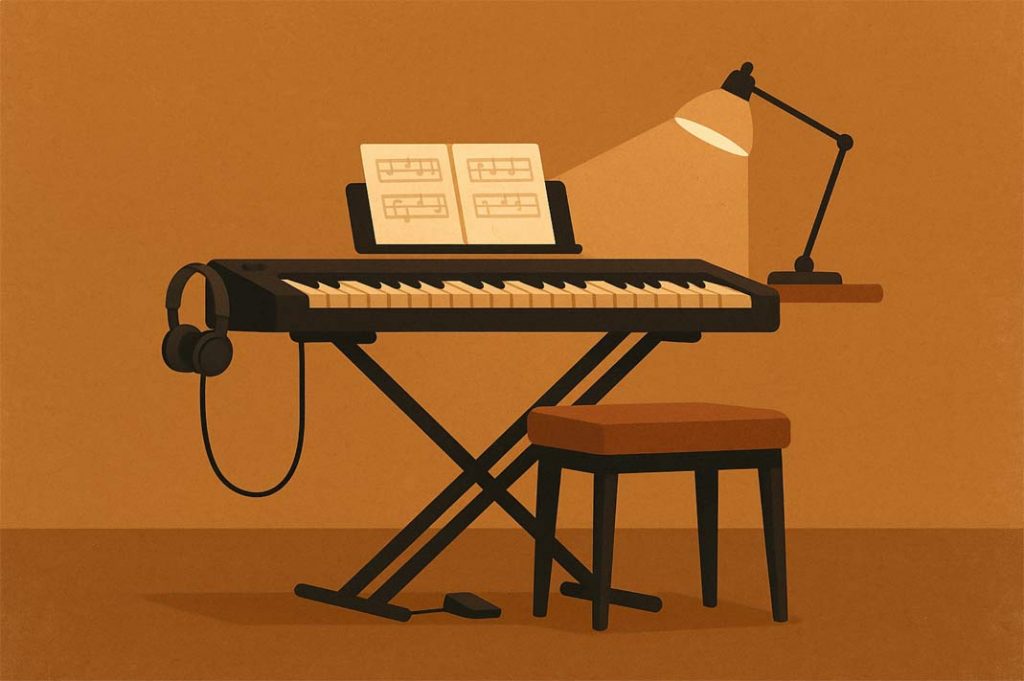
No. A keyboard with 61 full-size, touch-sensitive keys is enough to get started. I’d also recommend a sustain pedal.
Choosing a Keyboard or Digital Piano
Can I really learn classical music by ear?
Yes. That’s exactly how the Classics By Ear courses begin. You learn small sections by listening, watching and playing, with the written music there to help you as you progress.
Try It for Yourself
If you’re wondering whether you’re too old to learn piano, probably the best thing you can do is stop wondering and try a lesson.
The Free Test Drive lets you try Pianoforall for yourself without committing to anything.